Dental hygienists play a vital role in the dental sector. What they can and cannot do is still very much misunderstood. Not many people know how they can improve their oral hygiene with the help of a dental hygienist.
A dental hygienist can help prevent and manage gum problems by removing plaque and tartar, checking your gum health and giving practical advice for caring for your teeth at home.
You might need a trip to the dental hygienist if you have a build-up of plaque or tartar on the teeth. Plaque is a sticky substance that coats the surface of the teeth. If you forget to brush your teeth or miss parts of your mouth when brushing, this substance can harden into tartar. Brushing alone cannot remove tartar so you will need to see a dental hygienist.
If left untreated, plaque and tartar build-up can lead to gum disease. Gum disease causes the gum tissue to recede which can lead to tooth loss. If you ever notice blood in your spit when you brush your teeth, this is one of the early signs of gum disease.
A dental hygienist will give your teeth a comprehensive cleaning, removing surface stains, plaque and tartar. This will make it easier for you to care for your teeth at home. It can also help reduce the risk of cavities and more serious dental health issues.
How a dental hygienist helps your teeth and gums
A hygienist uses special tools to remove plaque and tartar deposits from your teeth. A dental hygienist treatment used to be known as a scale and polish. This is because scaling tools are used to scrape deposits from the surface of the teeth. They might also use an air-polishing device to remove surface stains.
A dental hygienist can also advise on correct brushing techniques. If it’s clear that you’re missing parts of your mouth, you aren’t flossing correctly, or you would benefit from a bit of specialist advice, a dental hygienist can help.
How often should I see a dental hygienist?
It will depend on your oral hygiene. Some people will visit the dental hygienist twice a year while others will attend far less frequently. If you’re not sure how often you should make an appointment, check with your dentist. And remember, you should be attending 1-2 checkups per year with your dentist.
Can you see a dental hygienist without seeing a dentist?
Whether a hygienist appointment is suitable without first seeing a dentist depends on your oral health and the care you need. Contact the practice and our team will explain the most appropriate appointment for you.
What do dental hygienists use to clean teeth?
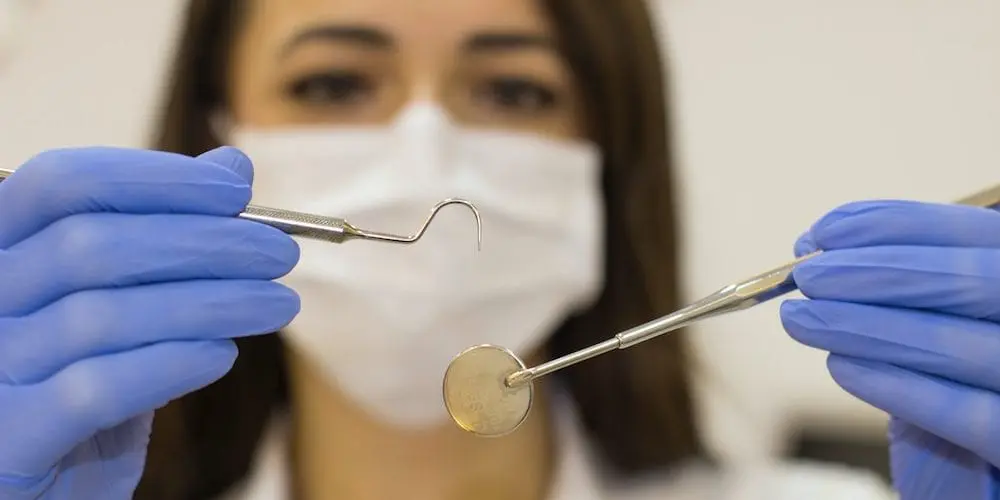
A dental hygienist will use a small mirror and a scaler to help remove plaque and tartar from your gum line and between teeth. You might feel pressure and a scraping sensation, but this shouldn’t hurt.
Your hygienist may then use a special tool that directs a high-powered stream of water, air and gritty particles at the surface of your teeth. This step polishes the tooth and removes surface staining. Polishing will not whiten the tooth structure, but it can make the teeth appear brighter.
Finally, a fluoride treatment may be used to remineralise the teeth. This can provide added protection from acidic food and drink.
Does a scale and polish get rid of stains?
Yes, many patients notice that their teeth look a little brighter following a scale and polish. However, if the stains are set deep into the dental material, a scale and polish will not remove them. You will need to arrange a teeth whitening treatment if you wish to lift deep-set stains. Booking a dental hygienist appointment before a teeth whitening session can optimise the results.
If you would like advice about hygienist appointments or gum health care in Glasgow city centre, contact Sloan Dental Merchant City. Our team can explain the most appropriate next step for protecting your teeth and gums.